Soil Infiltration Testing

The "MTC Difference"

We know  the most effective stormwater runoff controls often involve redirecting surface flow into to the native soil, reducing runoff and preventing many pollutants from entering waterways. 

Stormwater management structures can include bioswales, rain gardens, permeable pavements, subsurface infiltration structures, and infiltration basins, among others. To determine the feasibility of stormwater infiltration and to properly design stormwater management structures, our clients need accurate and reliable evaluation of the soil infiltration rate or permeability. 

With our staff of field engineers and geologists, our array of testing equipment, and our accredited laboratories, we are capable of handling all aspects of the soil infiltration or permeability testing process and provides high-quality data so that stormwater management systems can be efficiently and effectively designed.

On-site Services

  • Test Pits
  • SEMCOG Double Ring Infiltrometer for Double Ring Infiltration Testing
  • Percolation Test
  • Encased Falling Head Permeability Test
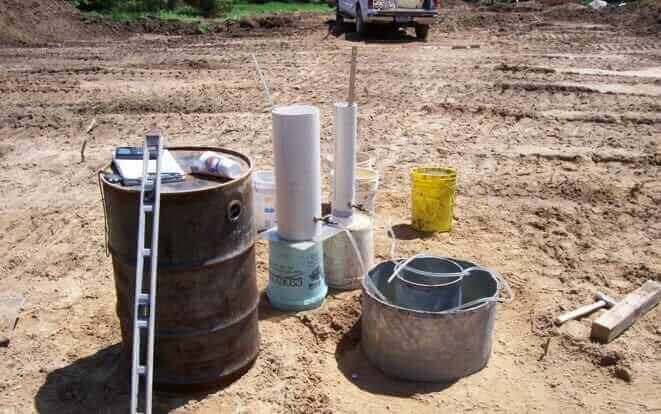
On-site infiltration testing equipment
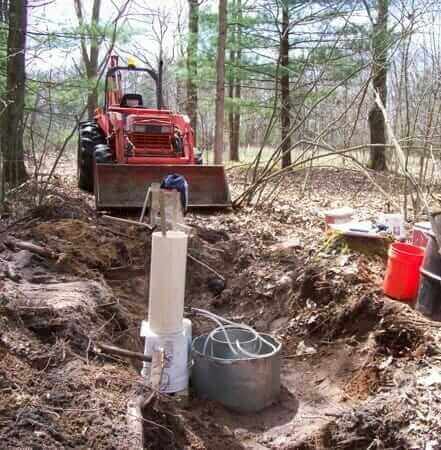
MTC performing Infiltration Testing

Laboratory Testing

  • Constant Head Permeability Testing for Granular Soils (ASTM D2434) 
  • Hydraulic Conductivity using a Flexible Wall Permeameter (ASTM D5084) 

  • Falling Head Permeability (USACE)

Soil Infiltration Testing FAQs

Infiltration rate is calculated by measuring how quickly water enters the soil over time. It is typically expressed in inches per hour and is determined by dividing the volume of water infiltrated by the surface area and time. Field testing methods, such as a double ring infiltrometer, provide accurate results.

A “good” infiltration rate depends on the application, but generally:

  • 1 to 3 inches per hour is suitable for many stormwater systems 
  • Below 0.5 inches per hour may indicate poor drainage 
  • Above 5 inches per hour may suggest overly permeable soils that require design considerations 

Acceptable rates are typically defined by local regulations and project requirements.

While both measure how water moves through soil, they serve different purposes:

  • Percolation tests measure how quickly water drains through soil in a borehole, often used for septic system design 
  • Infiltration tests measure how water enters the ground at the surface, commonly used for stormwater management design

Infiltration testing helps determine how stormwater will be managed on-site. It ensures that drainage systems, detention basins, and infiltration practices are designed properly to prevent flooding, erosion, and regulatory non-compliance.

A DRI test is used when accurate; site-specific infiltration data is needed for stormwater design. It is especially appropriate for:

  • Infiltration basins and rain gardens 
  • Low-impact development (LID) practices 
  • Sites where regulatory approval requires field-tested data

Several site conditions can lead to poor infiltration results, including:

  • Clay-heavy or compacted soils 
  • High groundwater levels 
  • Soil saturation from recent rainfall 
  • Construction disturbance or compaction 
  • Presence of fines or debris clogging soil pores